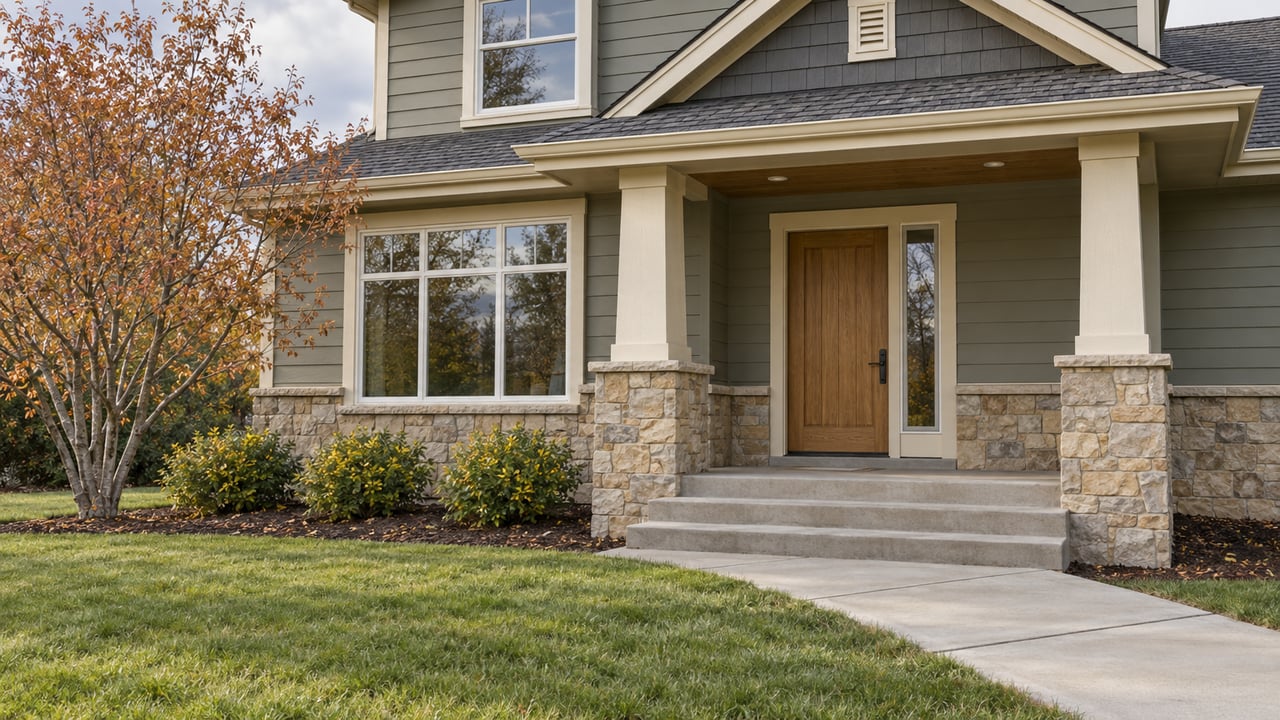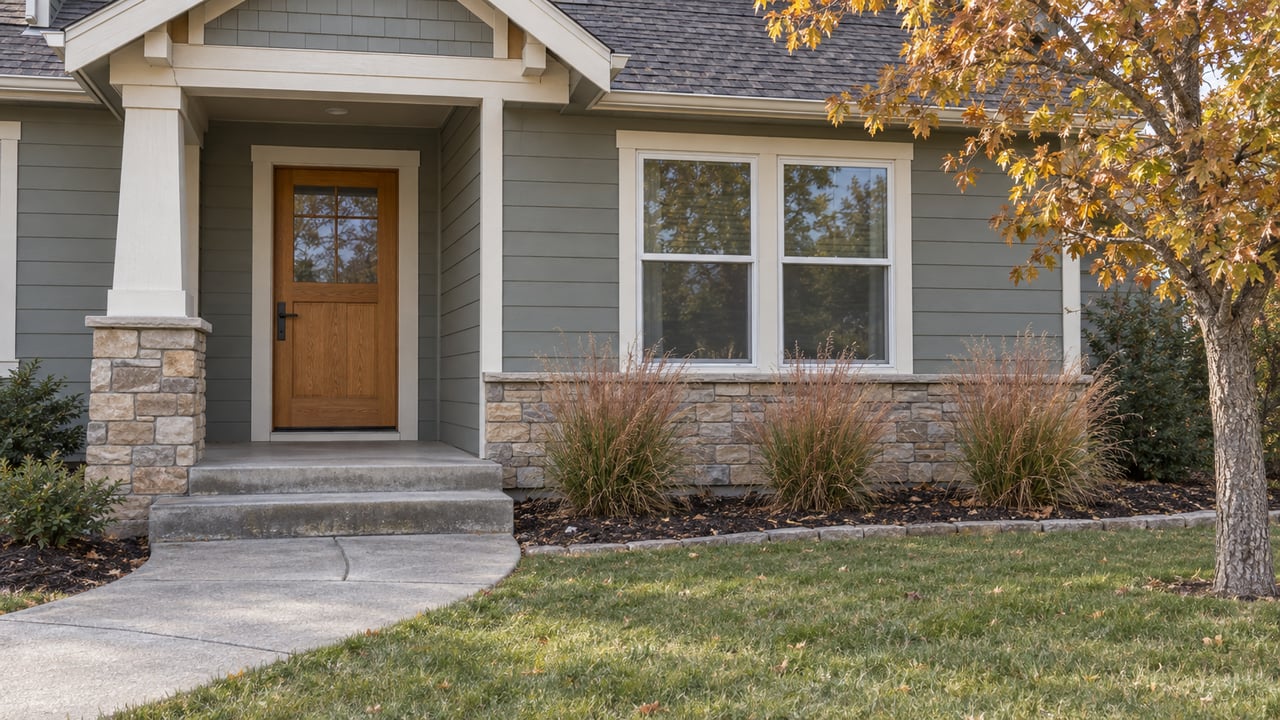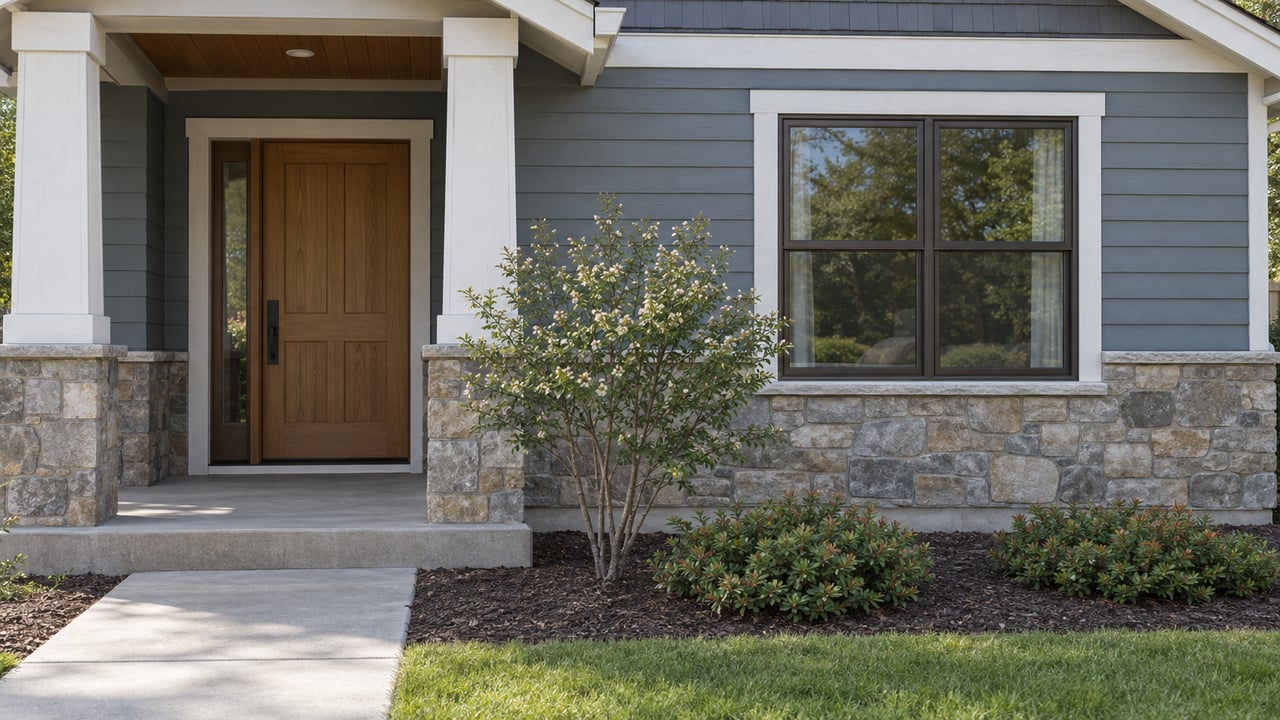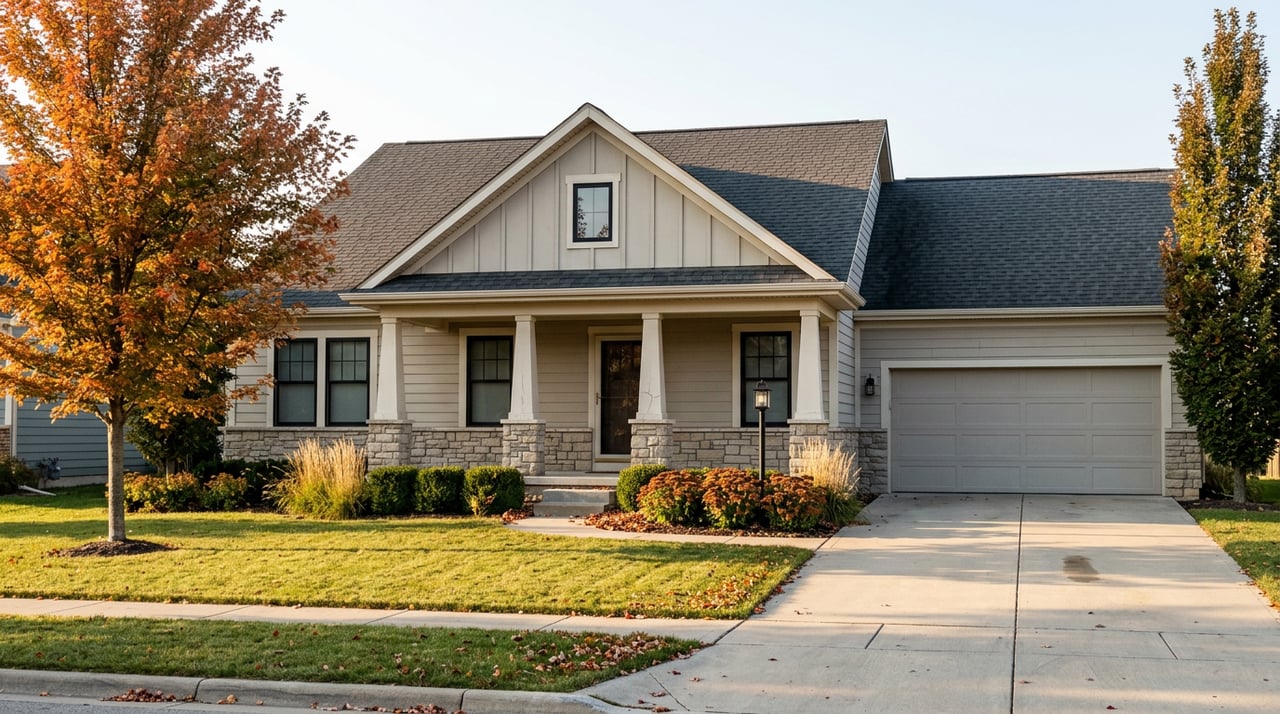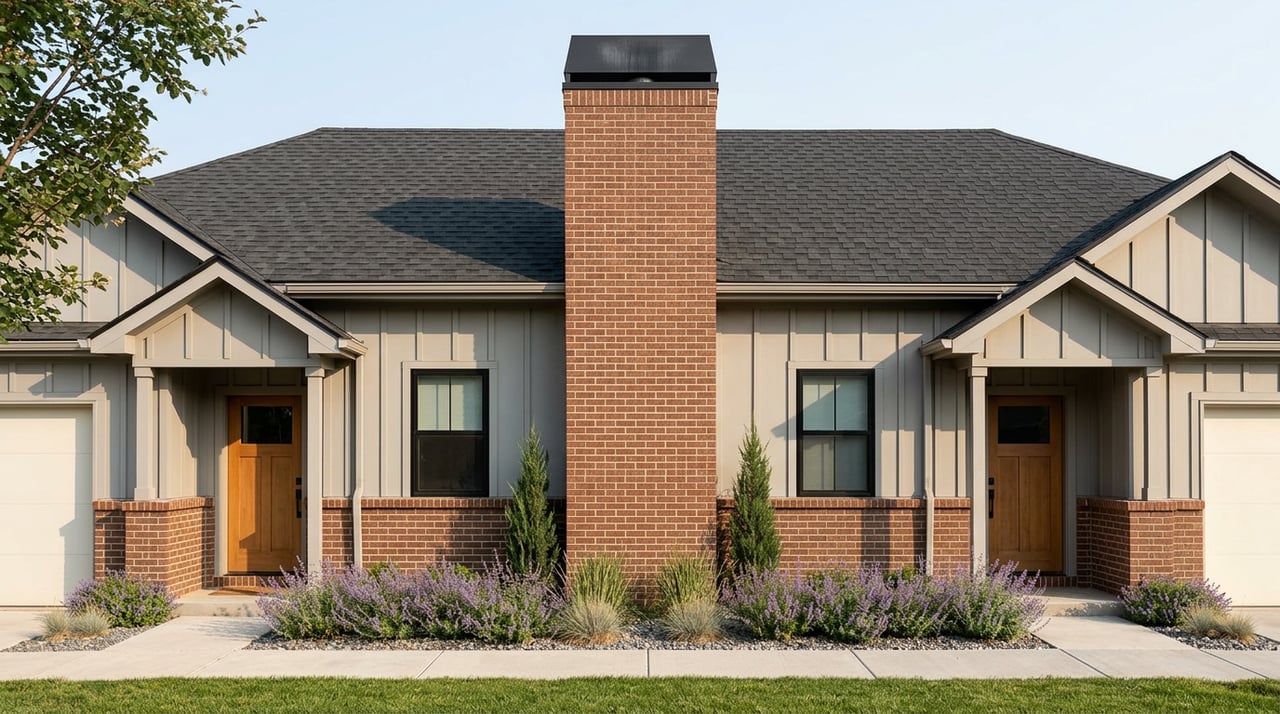
Walk the model row on Ash Circle in Homestead Hills and the first number most buyers write down is the HOA fee. Fifty dollars a month. It shows up on the listing sheet next to line items like "Maintenance Grounds" and "Snow Removal," and it reads like exactly what KB Home promised buyers when it opened this collection of paired homes here in March 2019: low upkeep, easy living, someone else handles the yard.
That fifty dollars is real, and it does what it says. What it doesn't do is tell you who owns the wall between your kitchen and your neighbor's.
What a paired home actually is
KB Home built 100 two-story paired homes across five floor plans in Homestead Hills Villas, ranging from roughly 1,400 to 1,900 square feet and priced from the $350,000s when the community opened. "Paired home" is the marketing term. On the county record, the structure type is "Duplex," and each unit shares one common wall with the home next door. A resale listing on that same Ash Circle street, built in 2019, spells this out plainly: Duplex, one common wall, HOA fee of $50 a month, and that fee covers exactly two things, grounds maintenance and snow removal.
If you're touring one of these homes, or you already own one and are getting ready to sell, that distinction between "paired" and "duplex" matters more than it sounds like it should. A single-family detached home in Homestead Hills has one owner responsible for every wall, every roof line, every pipe. A paired home has a second owner attached to your house, and Colorado has a specific legal mechanism for handling that.
The fee that sounds like a full policy
Here's the part that trips people up. Fifty dollars a month feels like a small, reassuring number. It suggests the HOA is quietly handling everything that could go wrong with a low-maintenance home.
It isn't. Look at what that fee is actually scoped to cover:
| What the HOA fee covers | What it doesn't cover |
|---|---|
| Common-area grounds maintenance | The shared wall between units |
| Snow removal | Shared roof sections or utility lines running through the wall |
| — | Repair costs when something in or behind the wall fails |
| — | Alterations to the shared structure |
The HOA dues are priced for what the HOA was actually chartered to do, which is landscaping and plowing. It was never set up to manage the physical connection between two homes. That job, in Colorado, typically belongs to a separate document called a Party Wall Agreement.
The document your HOA never signed
According to Geraghty Law Office, a Party Wall Agreement is a recorded covenant between the two owners who share a common wall. The Vail Daily reports that it's usually written by the builder when the duplex is constructed and recorded with the county. Once it's recorded, Colorado treats it as a covenant that runs with the land, meaning it attaches to the property itself and passes to every future owner, not just the two original buyers who signed it.
It typically spells out who pays for what when the shared wall needs work and how repair decisions get made if the two owners disagree. None of that lives in your HOA paperwork. It lives in a separate recorded document, and it's easy to miss because nobody hands it to you at the model home.
A Denver-area attorney who works on these agreements put it plainly: buyers frequently don't realize a Party Wall Agreement exists on their property until after they've already closed. By then, the terms are already locked in, whatever they say.
Where this actually shows up
The scenarios where this matters aren't hypothetical. A Colorado attorney writing about duplex ownership walked through a common one: the plumbing running through the shared wall bursts during a cold snap. The agreement determines how repair costs are split.
The same logic applies to smaller things. If you want to add a window, run a new vent, or modify anything that touches the shared structure, review the agreement as part of your due diligence.
What to ask before the objection deadline passes
None of this is a reason to avoid a paired home in Homestead Hills. It's a reason to ask for one specific document early, while you still have leverage to act on what it says.
As ColoradoBiz recommends, review the agreement before your title objection deadline:
- Ask your agent or the listing agent directly whether a Party Wall Agreement is recorded against the property, separate from the HOA covenants
- Request a copy and read the sections on repair-cost splitting, insurance requirements, and alteration consent
- Check the title commitment for any recorded amendments to the original agreement, since these can change what was true when the home was built in 2019
- If the agreement is missing, unclear, or seems outdated, loop in a real estate attorney before closing, not after
This isn't legal advice, and a Party Wall Agreement is specific enough to your exact unit that it's worth a real conversation with an attorney rather than a general rule of thumb. But knowing the document exists, and asking for it during your contract period instead of after closing, is the difference between a routine step and an unpleasant surprise a few years down the road.
Why the pace of this market makes the timing worse
Thornton's housing market has moved fast enough recently that steps like this are the first ones buyers skip. Over the three months ending May 2026, homes across Thornton sold in an average of about 17 days. As of March 2026, the city's inventory sat at roughly 1.8 months of supply, tight enough that buyers are still writing offers quickly and waiving contingencies to compete.
That pace is exactly when a document like a Party Wall Agreement gets overlooked. Nobody wants to slow down a fast-moving offer to request paperwork that isn't part of the standard Colorado contract forms. But the request costs you almost nothing, and skipping it is the one step that's hardest to undo once you own the house.
A few questions we get
Does every paired home in Homestead Hills have a recorded Party Wall Agreement? Builders typically record one at construction, since it's the standard way to formalize a shared wall in Colorado. Confirm it exists for your specific address rather than assuming it does.
Can I request the agreement before I write an offer? Yes. You can ask the listing agent for it at any point, and it's reasonable to request it as part of your due diligence once you're under contract, well before your title objection deadline.
What if my title commitment doesn't mention one? That's worth raising directly with a real estate attorney. A missing or unrecorded agreement can create real uncertainty about who's responsible for shared structural elements, and it's better to resolve that question before closing than after.
If you're looking at a paired home in Homestead Hills, or you already own one and want to understand exactly what your HOA fee does and doesn't protect, I'd rather walk you through the real paperwork now than have you find out the hard way later. Jackie Roacho works this neighborhood block by block, and a quick conversation can save you a much harder one down the road. Schedule a free consultation and let's go through it together.