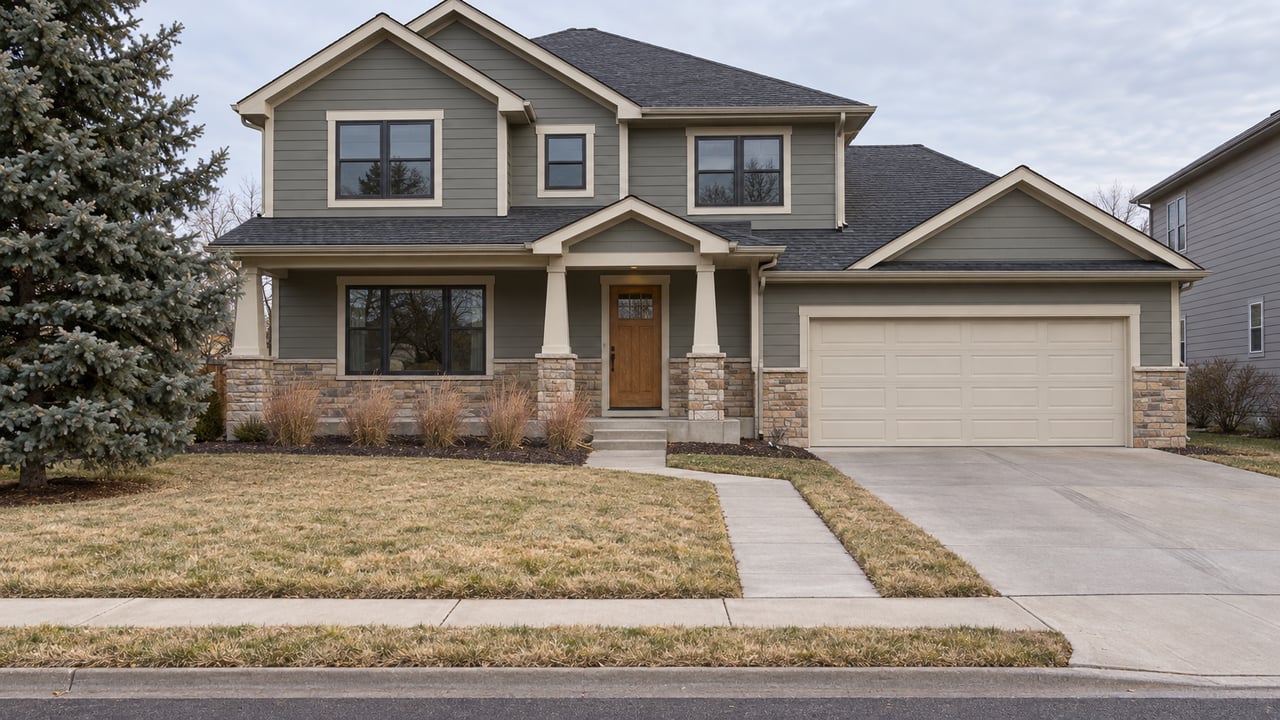
Thornton's own list of first-priority plow routes includes the two roads that meet at the corner of Homestead Hills. Colorado Boulevard and 136th Avenue are both primary routes. Thornton's Streets page says city plows go there first, in every storm. The city places Homestead Hills itself at 136th Avenue and Colorado Boulevard.
The streets inside the neighborhood are a different story. They're residential streets, and under Thornton's snow plan a residential street gets a city plow in only one kind of storm. Every other snowfall, the street in front of your house waits, while the arterial at the entrance gets plowed and treated. Once you know the thresholds, you can tell from a forecast what your morning will look like.
The corner gets plowed first
Thornton's Streets page sets up three tiers. Primary routes are major arterials like Colorado Boulevard, Washington Street, 104th Avenue, 120th Avenue and 136th Avenue. Secondary routes are local collector streets, school zones and fire station zones. Residential streets are the third tier.
In a light storm, the city says primary routes are treated within three hours of snow building up on the road. After that, crews move to the secondary routes. In heavier storms, snow can fall so fast that only the primaries stay passable until it lets up. Secondaries get plowed once the primaries are clear.
For Homestead Hills, that means the drive out to Colorado Boulevard or 136th Avenue will usually be in better shape than the first block of your own street. The gap between the two is the part of a snow day you handle yourself.
The inch count that decides your street
Thornton sorts every storm into one of three classes. The class decides what happens on the residential streets inside Homestead Hills.
| Storm class | City definition | What a Homestead Hills street gets |
|---|---|---|
| Class I | Lasts less than 12 hours, under 4 inches | No residential plowing. Crews work primary and secondary routes only. |
| Class II | Lasts more than 12 hours, 4 to 8 inches | No residential plowing. If a long freeze follows, the city may plow its tertiary routes, which are 55 more miles of selected neighborhood streets. |
| Class III | Lasts more than 24 hours, over 9 inches | The city brings in extra equipment and contractors. Residential streets get one pass down the middle, with snow pushed to the right side. |
The Class III pass opens a single lane. The city says residents "will not necessarily see bare pavement" afterward. The goal is "a single passable lane down the middle" that passenger vehicles equipped for winter travel can drive. In Class II, the tertiary pass follows the same one-pass-down-the-middle approach. Those streets are cleared only after the primary and secondary routes are cleared and treated.
The city also runs a Snow Plowing Status map, but it tracks residential streets only during Class III events. In a 3-inch or 6-inch storm, the map won't show your street because the city isn't plowing it.
During a storm, all city crews and equipment work 12-hour shifts. In a Class III storm, contractors join them.
The ridge at the end of the driveway
When a Class III plow does come through, it can leave a ridge of packed snow along the side of the street. The city calls these windrows. Thornton plows residential streets down the center to avoid burying sidewalks, parked cars and driveways, but it says it can't always avoid blocking a driveway.
The city also says that it does not remove or haul away snow as part of this program. Snow goes to the right side of the street, so after a big storm the homes on that side will see the ridge first.
Windrows are packed by the plow, so they're denser than the snow that fell on the driveway. Clear the windrow before the next freeze sets it.
Sidewalk questions and reports
If a public sidewalk near you stays buried, Thornton has you report it with a My Thornton service request, with as much location detail as you can give. City Voice also lists Code Compliance at 303-538-7517 or [email protected] for sidewalk questions and reports.
HOAs add another layer. On its 311 page about city sidewalks and trails, the city says many HOAs handle the sidewalks and trails next to their subdivisions. Thornton's HOA and property management list names Homestead Management as the manager for Homestead Hills, a place to ask about sidewalk responsibilities, what the association clears and how much snow triggers its contractor.
Where the shovel should point
Thornton's Streets page includes a short list of habits that keep a light storm from becoming a week of ice. Several apply directly to a street that won't see a city plow until a storm tops 9 inches:
- Shovel onto your lawn and garden. The city asks residents to put snow on sunny parts of the yard and keep it out of roadways and bike lanes, so ice doesn't build up in the gutters after the storm.
- Park 6 inches to a foot from the curb. That leaves room for melting snow to drain.
- Shovel early and shovel to the pavement. Snow left in place gets packed down and turns into ice.
- Push the snow. The city's advice is to push with the shovel and not lift.
- Use pet-safe, eco-friendly deicers. Salt runoff can damage lawns and flow into the storm sewer.
- Report gutter ice early. Crews can apply Ice Slicer to ice in the gutter, and the city says early notice can slow or prevent buildup. Requests go through My Thornton.
On a street that waits for Class III, each of these does more. A 4-inch storm left on the pavement turns into ice in the ruts if a cold stretch follows. Clearing your own frontage to the pavement is how a Class I or Class II storm stays a one-day event on your block.
Two inches is the Snowbusters line
Thornton's Snowbusters program uses a lower threshold than any storm class. The city matches volunteers with residents age 62 and older who can't otherwise arrange or afford snow removal. The city's volunteer page describes those residents as income-qualified seniors. According to the 2026–27 Snowbusters listing, volunteers commit to an assigned resident from November 15 through April 15. They clear that resident's sidewalk and driveway within 24 hours after any snowfall of 2 inches or more.
The 2-inch trigger also means volunteers go out for a lot of Class I storms, the ones where no city plow comes into a residential neighborhood.
The commitment window opened on November 15, and the season is already underway. Registration stays open through April 1, 2027. Volunteers must be at least 14, and anyone under 18 needs a waiver signed by a parent. The program welcomes individuals, families, clubs, office groups and substitutes, and it provides shovels and safety vests. You can sign up by calling 303-255-7831 or at goCOT.net/volunteer.
If you live near the Homestead Hills Park loop and already walk your block after a storm, a Snowbusters assignment could be close to home. More on the park and nearby paths is in our Homestead Hills outdoor guide.
If you're getting ready to buy, sell or move within Homestead Hills this winter, I'm happy to help. Jackie Roacho works with Homestead Hills households year-round, snow days included. Schedule a free consultation.