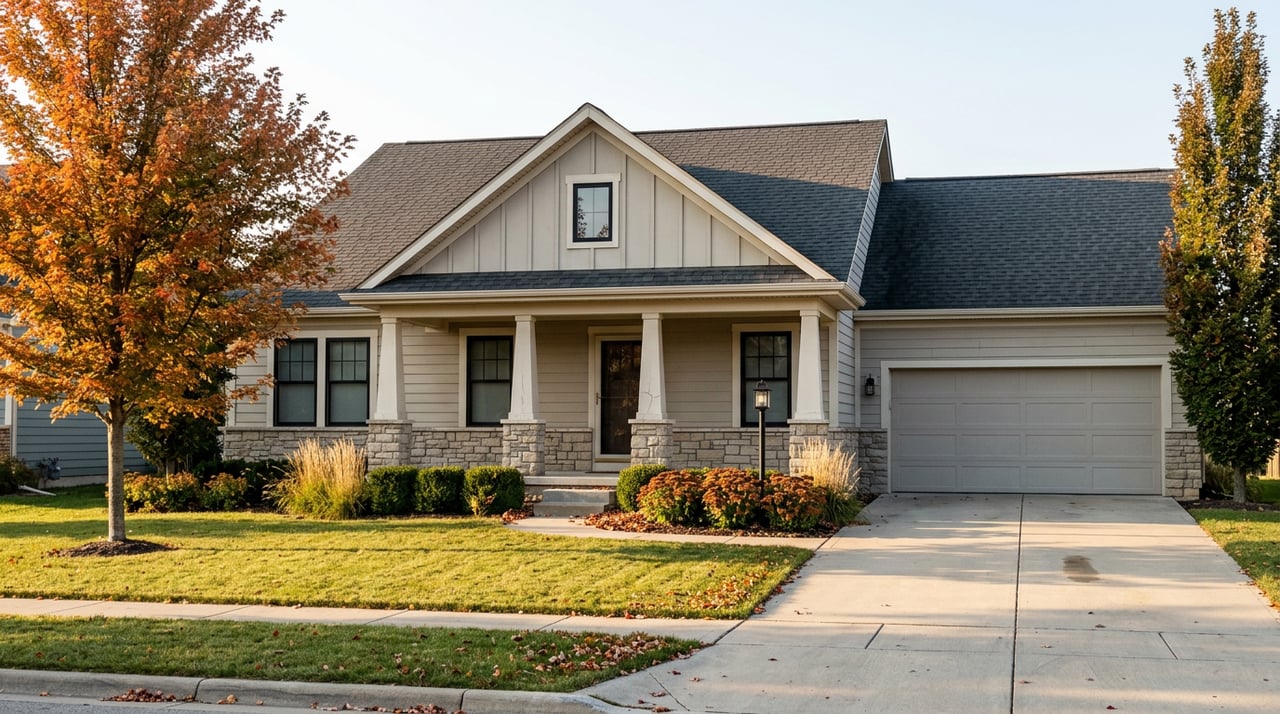
Toll Brothers built all 362 single-family homes in North Hill between 2018 and 2021, according to North Holly Metropolitan District's own site. One builder, one subdivision, roughly three years start to finish. That construction schedule set a second calendar running underneath every closing in that window, one most owners never think about until they need it: Colorado's limit on how long a builder can be held responsible for a construction defect.
Most people in North Hill have never heard the phrase "statute of repose." They have heard of a warranty, because that's the paperwork the builder handed over at closing. The warranty and the statute are not the same thing, and confusing them is exactly how a homeowner discovers, at the worst possible moment, that the window already closed.
The Warranty Is a Contract. The Statute Is a Deadline.
A typical new-construction contract in Colorado layers a few warranty periods on top of each other: roughly one year for workmanship, two years for mechanical and electrical systems, and often ten years for major structural components. Those numbers come from the builder's own paperwork and can vary by contract.
Running alongside that, and independent of it, Colorado law sets its own limits under C.R.S. § 13-80-104. A homeowner has two years from the point they discover, or reasonably should have discovered, a defect to bring a claim. That's the statute of limitations. Separately, there's a statute of repose: six years from substantial completion of the home, full stop, regardless of when a defect shows up, with a narrow exception that can push it to eight years if the defect surfaces in year five or six.
Here's where it gets confusing for anyone in a Toll Brothers-built neighborhood. Calling the builder about a warranty claim doesn't pause the legal clock. If you report a squeaky floor in year one and a repair stretches out over two years for any reason, the statute of limitations may have already run out underneath you while you thought you were still "in warranty." The ten-year structural warranty sounds reassuring, but it's a private promise from the builder, not a right the statute preserves. If the statute of repose closes at year six or eight, a structural issue that shows up in year nine has nowhere to go, warranty language or not.
Where North Hill Actually Sits on That Clock
Because Toll Brothers built the entire neighborhood in one continuous stretch instead of spreading construction across a decade or two, North Hill's homes aren't approaching this deadline on a scattered, individual basis. They're approaching it together, in a band that spans roughly five years.
| Approximate Closing Year | Base 6-Year Repose Ends | Extended 8-Year Repose Ends |
|---|---|---|
| 2018 | 2024 | 2026 |
| 2019 | 2025 | 2027 |
| 2020 | 2026 | 2028 |
| 2021 | 2027 | 2029 |
As of this fall, the earliest North Hill closings from 2018 have already passed the base six-year mark and are sitting at the outer edge of even the extended window. Homes that closed in 2020 are hitting the six-year threshold this year. The newest homes in the subdivision, closed in 2021, won't reach that mark until 2027.
In a neighborhood built out over twenty or thirty years, this deadline trickles through one house at a time and nobody notices the pattern. In North Hill, it's compressing into a single, community-wide event, and it's happening right now.
What This Means If You're Selling This Year
If you're listing a North Hill home that closed in 2018 or 2019, any latent defect you haven't already flagged to the builder is likely past the point where it could still be pursued against Toll Brothers, or is close enough to that line that the distinction matters. That doesn't create a legal disclosure obligation you didn't already have. Colorado sellers are still required to disclose known material defects regardless of who might be liable for fixing them. What it does change is the buyer's leverage and expectations on price if something turns up during their inspection. A foundation crack in a five-year-old subdivision reads differently to a buyer than the same crack in a subdivision where the builder-recourse window is confirmed closed.
If something has been nagging at you, an inspection focused specifically on construction defects, not the general home inspection most buyers order, is worth doing before you list, while there's still a chance to document it against the extended repose window rather than after.
What This Means If You're Under Contract to Buy
Buyers sometimes assume "newer construction" means the builder is still on the hook if something goes wrong. In North Hill specifically, that assumption needs a year attached to it. A home from the 2021 phase still has a few years of statutory runway. A home from the 2018 or 2019 phase may not, even though it sits on the same street, has the same floor plan, and was marketed with the same finishes.
Before you waive an inspection contingency to compete on a North Hill listing, it's worth confirming the home's actual closing date or certificate of occupancy date, since that's what starts the statutory clock, not the year construction began. A standard home inspector is looking for problems, not diagnosing whether those problems trace back to a builder defect that might still be actionable. Those are different skill sets, and the second one only matters while the clock is still running.
The Board That Actually Answers Your Records Request
North Hill doesn't have a traditional homeowners association. It's governed by North Holly Metropolitan District, a special district that funds infrastructure and enforces design covenants through a mill levy rather than membership dues. That distinction matters here for a specific reason: for years, the district's board was controlled by employees of the development side rather than by homeowners.
In February 2020, owners in North Holly organized alongside neighbors in Willow Bend, Lewis Pointe, and Trailside to encourage residents to run for their metro district boards, according to reporting by Colorado Politics. The effort worked in North Holly. Homeowners won board seats that spring, and the new resident-controlled board fired the existing management company and brought in Wolfersberger LLC to handle the district's finances going forward.
That history is worth knowing if you're trying to pin down records related to your home's construction, original certificate of occupancy, or the subdivision's build-out timeline. Today the district's board is made up of homeowners, and it's a natural place to start that conversation.
A Few Questions We Get
Does the statute of repose deadline mean I can't fix a defect after it passes? You can still repair your home at any point. What ends is your ability to bring a legal claim against the builder for the cost, at least through the statute of repose. Manufacturer warranties on specific products, like windows or roofing materials, sometimes run separately and longer.
If I already reported an issue to Toll Brothers, does that protect me after the deadline passes? Not automatically. Documentation helps, but the notice itself doesn't extend the statutory clock. This is exactly the kind of question worth a short conversation with a construction defect attorney rather than a guess.
Does this affect my home's value? It's one factor among many, and its weight depends on whether there's an actual known issue versus a clean inspection history. A documented, resolved repair generally matters far less to a buyer than an undisclosed one discovered later.
If you're weighing a sale or a purchase in North Hill and want to talk through what your specific closing date means for your timeline, Jackie Roacho is glad to walk through it with you.